The Missing Skill in Modern Sports: Discernment
The Conversation Everyone Is Avoiding
People in sports are talking about everything except discernment.
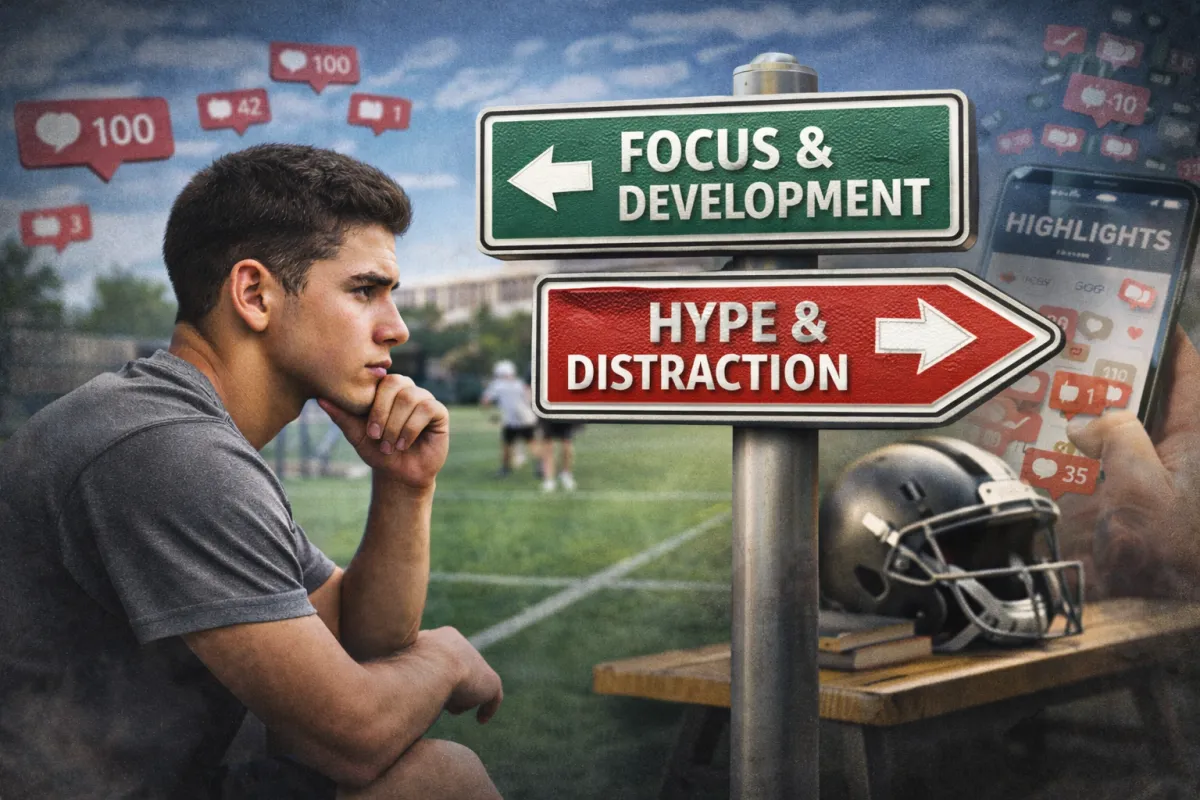
The noise is constant. Metrics. Exposure. Rankings. NIL. Transfer portals. Algorithms. Platforms. Opinions layered on top of opinions.
Very little discernment.
Discernment is the ability to decide what matters before energy is spent. It is the difference between movement and progress. It is the filter that separates signal from noise.
Most athletes are not failing because they lack talent. They struggle because no one helps them decide what deserves their attention.
What Happens When Discernment Is Missing
Without discernment, activity masquerades as development.
More training does not automatically produce better performance.
More exposure does not guarantee the right opportunities.
More opinions do not create clarity.
More options do not equal better decisions.
The system rewards urgency. Discernment requires patience.
Athletes are pushed to do more, post more, attend more, and commit faster. Rarely are they taught how to evaluate whether any of it is actually serving their growth.
Discernment Is Asking Better Questions
Discernment slows the process just enough to ask the right questions.
Is this feedback coming from experience or proximity.
Is this advice aligned with the athlete in front of me or the brand behind it.
Is this opportunity developmental or performative.
Is this system designed to serve athletes or extract attention.
Is this path building skill or just creating motion.
Most mistakes in sports are not physical. They are judgment errors made under pressure.
Why Athletes Pay the Highest Price
When discernment is absent, athletes absorb the consequences.
They chase exposure before readiness.
They specialize before foundations are built.
They commit emotionally before understanding expectations.
They burn energy reacting instead of building.
Young athletes trust adults to see clearly. When clarity is missing at the top, confusion becomes the environment.
Coaches and Families Are Not Immune
Coaches feel pressure to keep up with trends rather than protect development.
Families feel urgency driven by fear of being left behind.
Everyone feels rushed. Few feel grounded.
Discernment is replaced by comparison. Comparison replaces confidence.
That is how athletes end up overwhelmed instead of supported.
The Real Competitive Advantage
The future edge in sports is not more data.
It is better judgment.
Not louder voices.
Clearer ones.
Not faster decisions.
Better ones.
Discernment protects athletes from burnout.
It preserves long-term development.
It keeps careers intact when the noise gets loud.
Why Discernment Is Unpopular
Discernment does not sell hype.
It does not reward shortcuts.
It does not move fast enough for algorithms.
It requires saying no.
It requires context.
It requires responsibility.
That is exactly why it matters.
Bringing the Conversation Back to the Front
Sports does not need more information.
It needs better filters.
Athletes deserve guidance that prioritizes clarity over chaos.
Families deserve frameworks, not fear-based urgency.
Coaches deserve space to lead, not chase trends.
Discernment should be taught, modeled, and protected.
Until it is, the noise will keep winning.
Game Plan Takeaways
Discernment is a skill, not a personality trait. It can be taught.
More activity does not equal more progress.
The right question often matters more than the right answer.
Clarity protects development better than hype ever will.
Athletes thrive when guidance filters noise before it reaches them.
Call to Action
If an athlete had clearer filters, how many unnecessary decisions would disappear.
If a family had better judgment frameworks, how much pressure would be removed.
If development was protected before exposure, what would change.
That is the work worth doing.